Can AI outrun the FDA?
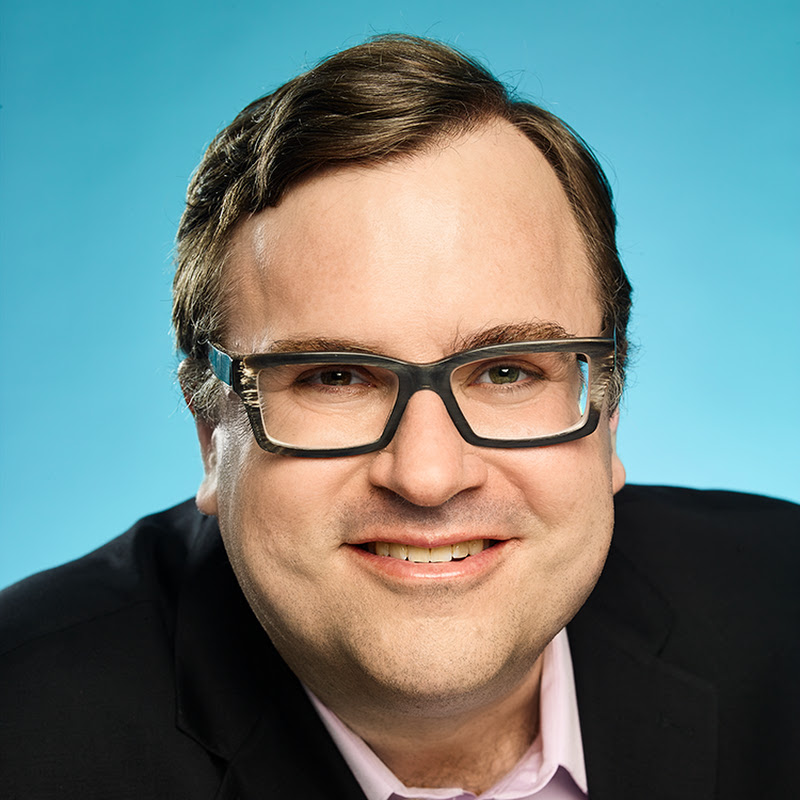 Reid Hoffman
Is it worth your time?
You get a detailed account of how network effects drive tech clusters, why biological atoms complicate AI drug development, and how political volatility impacts institutional freedom.
This conversation examines why major tech hubs persist through network effects, how AI drug discovery intersects with FDA regulations, and why political pressure threatens media freedom.
FDA rules for AI drugs. Hoffman argues that curing human diseases through AI depends as much on regulatory hurdles as on technological breakthroughs. He expects the time until the first AI-discovered drugs cure disease to be a very small number of years, but notes that the timeline for affecting human health outcomes is driven more by the FDA than by the algorithm. To build effective therapeutics, his company partners with Schrodinger to use encoded chemistry and physics knowledge to configure datasets.
Media interviews and political pressure. Hoffman warns that media outlets pre-obeying political authority by pulling interviews due to FCC rules create a dangerous climate of fear. He argues that this intimidation is anti-American and contradicts 250 years of freedom of the press. He expects political volatility to worsen after November regardless of whether Democrats win the House.
Tech hubs and city networks. Hoffman argues that predictions claiming San Francisco and New York will be replaced fail because network effects anchor these cities as the world's leading tech and finance hubs. He notes that companies like Shopify succeeded elsewhere by playing a long game on the network effect of the internet relative to e-commerce. Founders choosing where to build must align their startup with the economic graph that fits their specific industry.
Why Tech Hubs Remain in Major Cities
When asked why some people continue to predict the death of San Francisco and New York, or claim that Miami and Austin will replace them as tech and finance capitals, I believe these predictions are based on how people think the world should be organized rather than how it actually is. The persistence, growth, and compounding of these cities are driven by network effects. This fundamental strength—networks of talent, capital, and knowledge—is what made Silicon Valley what it is and likely applies to the New York financial scene as well. This is why the Silicon Valley Bank data showing continued growth in VC-backed companies does not surprise me; the death of Silicon Valley has been predicted for at least 20 years.
While I would prefer to see ten or twenty different growing tech hubs and try to help foster that in various US cities and value-aligned international cities like London, Paris, Rome, and Milan, the reality of network effects is what leads to blitzscaling. We should focus more on other cities to ensure they have growth, but the core networks remain powerful.
If a founder cannot start a company in San Francisco, they should choose a location based on the economic network, or the economic graph, that fits their industry. For instance, starting a fashion brand in Silicon Valley would be an impossible mission compared to New York or LA. The right city is where scalable companies and financing emerge, and where the networks for hiring talent and achieving global scale are strongest. In some cases, this might mean being near a university with raw talent and innovation.
If someone is creating something radically new, being somewhat askew from the main hub can work. Shopify and Spotify are interesting lessons in this; they didn't have the benefit of the Silicon Valley network, so they built separately. Spotify first guaranteed record labels Scandinavian revenue within a focused area to reach critical mass. Shopify played a long game on the network effect of the internet relative to e-commerce because Silicon Valley assumed Amazon owned all shopping. Tobi Lütke is a world-class founder who builds an alternative path elsewhere while still ensuring his team draws from the Silicon Valley knowledge base, including holding board meetings there to remain competitive.
The Intersection of AI and Biotech
When Siddhartha Mukerji and I discussed the direction of our company, Manis AI, we wanted to avoid the classic Silicon Valley approach to pharma and biomedicine, which tends to be too oriented toward software and bits. Some believe we can simply create new drug research AIs or simulations that output everything. While those transformations would be amazing if they worked, we need an approach based on biological atoms. Biological atoms are a midpoint; they are dynamic, somewhat programmable, and operate through the language of biology, cells, and chemistry.
We believe the time is now for this approach because our current solutions for essential human well-being, such as curing cancer, are barbaric and old school. Cancer kills everyone regardless of age, race, or nation. Unless it is caught early enough for simple surgery, we often rely on chemotherapy or CAR-T, which essentially try to kill the patient and the cancer simultaneously, hoping the cancer dies first. There must be better ways of managing this.
One of the hosts noted that AI is compounding quickly while the biomedical curve remains heavily regulated and slow. The classic Silicon Valley insight is to treat this as a search problem—like a Google for the right small molecule—or a generative AI task where one inputs a desire to solve triple-negative breast cancer and receives a molecule as output. Currently, models are nowhere close to doing that without pure hallucination. To leverage new scale in compute and learning, we have hired a team to identify problems ranging from creating generative models that are predictive for therapeutic molecules—rather than just protein folding like AlphaFold—to addressing data limitations. We have a partnership with Schrodinger to use their encoded chemistry and physics knowledge to configure our datasets. We are also considering clinical testing and business models, as the entire field makes the process more complicated and slower. We now have a full company in New York making progress.
Regarding the prediction that AI will cure practically all diseases within 20 years, I believe the time until the first AI-discovered drugs cure disease is a very small number of years. We are already in early prototyping phases, having filed some INDs and prospective patents to get the factory running. However, the timeline for affecting human health outcomes is driven more by the FDA and other processes than by technology.
It seems plausible that the vast majority of current human diseases will have cures, though some may be unsolvable due to the structural nature of biology or the fact that diseases evolve. Human progress over the last 50-plus years has been defined by solving diseases through vaccines and other biomedical advancements. While some individuals experience side effects—just as they do with aspirin or shellfish—the statistical trade is that these are life-saving for the vast majority. One of the hosts remarked on how radically different life expectancies were in 1900, and I believe AI is the next phase of that acceleration.
Media Censorship and Political Volatility
One of the hosts describes a situation where CBS lawyers prevented Stephen Colbert from airing an interview with Democratic Senate candidate James Tyler Rico, citing the FCC's equal time provision and the potential desires of Brendan Carr. This "pre-obeying" occurs because media outlets fear retribution from the Trump administration, which has threatened to pull licenses.
Creating fear in citizens and media organizations is precisely part of the autocratic playbook; if everyone stands up and disobeyed, it would be very hard for them to act. By making an example of others—as seen in the early approach with Jimmy Kimmel—they signal that they can hurt people very badly, leading others to comply to avoid similar fates. As citizens and leaders, this is a time to show courage. We have a responsibility to humanity first, then society, and then to business.
I found the Kimmel situation amusing because, for the first time, I found myself on the same side as Ted Cruz and Tucker Carlson. They are smarter than many of the people supporting the administration's crushing of free speech and free assembly. Those supporting these anti-constitutional actions fail to realize that if this happens now, the same could happen under a future Democratic administration. I believe Brendan Carr has good reason to lose his job for this. This kind of intimidation, bullying, and fear is anti-American and contradicts 250 years of freedom of the press and assembly. People who are quiet or supportive of this are demonstrably un-American.
When asked how the landscape will shift after November and whether Democratic wins in the House might reduce this retribution or cause a lame-duck administration to tighten its grip, I believe it will get worse and more volatile. A public loyalty oath for the Trump administration is the claim that the 2020 election was stolen. The claim is that Joe Biden stole the presidency while Trump had a Republican Senate and Republican Secretaries of Election in most states, yet the election was not stolen for Senate or House seats. It is amazing to watch people perform gyrations to justify this.
If the Democrats win the House, Trump will likely go in one of two directions. He will either claim the election was fake—perhaps arguing that Democrats stole it with illegal immigrants, while a massively funded ICE terrorizes blue cities instead of focusing on the border—or he will claim the Republican party is too weak because they are not using him. He will not acknowledge it as a referendum on how bad things have been in a year.