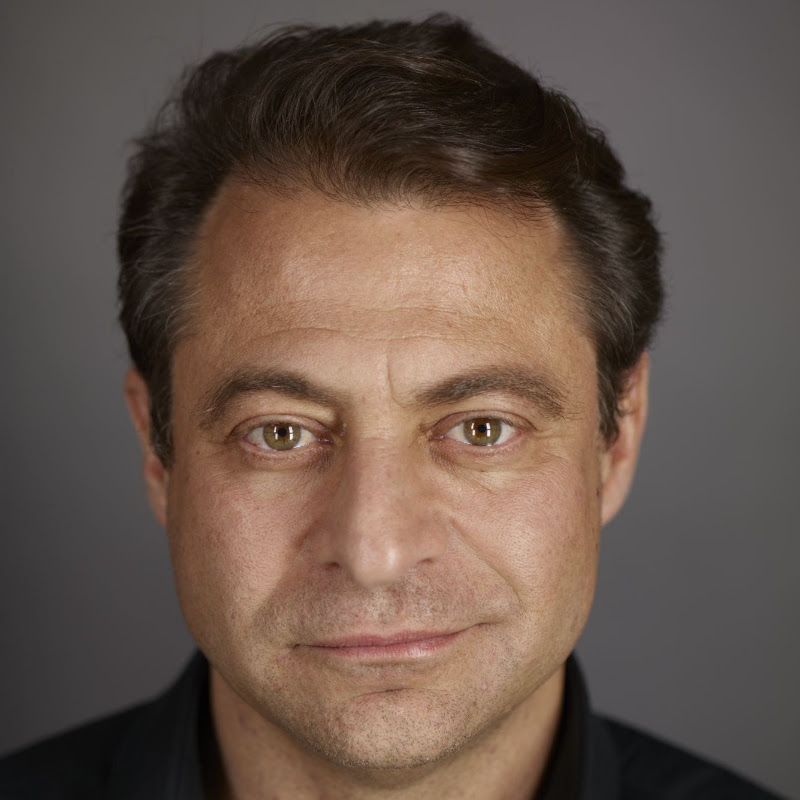
Alex Wissner-Gross
Area of Focus
Alex Wissner-Gross is a research scientist and entrepreneur working in the fields of artificial intelligence, computational physics, and applied technology. His work focuses on the physical foundations of intelligence and the development of advanced technological systems.
Born
Not available.
Citizenship
United States.
Education
He earned S.B. degrees in physics, electrical engineering, and mathematics from the Massachusetts Institute of Technology and a Ph.D. in physics from Harvard University.
Occupations
He is a research scientist, entrepreneur, and fellow at the Institute for Applied Computational Science at Harvard University.
Career & Projects
In 2007, Wissner-Gross founded CO2Stats, a Y Combinator-funded company that measured carbon dioxide emissions associated with website usage. His research has spanned computational physics, financial technology, and nanotechnology, including work on diamond-coated medical implants and the impact of physical latency limits on high-frequency trading.
His most notable research, published in 2013 with Cameron Freer, proposed a mathematical framework called "causal entropic forces." This theory suggests that intelligent behavior can emerge from systems driven to maximize their future freedom of action. He demonstrated this through the Entropica software, which exhibited goal-directed behaviors such as tool use and balancing without explicit objectives. He is currently a participant in the Moonshots Podcast, where he discusses topics including the technological singularity and Dyson swarms.
Vision for the Future
He views intelligence as a process of maximizing future freedom of action by keeping as many future possibilities open as possible. He has proposed that this principle could serve as a new route to artificial intelligence, allowing for the emergence of purposeful behavior from general constraints rather than hand-coded goals.
Additionally, he maintains that progress in artificial intelligence depends on the availability of suitable training data sets and environments, alongside algorithmic and computing power. His recent public commentary explores the long-term trajectory of technology, including the potential for large-scale space-based energy structures.