The Singularity Countdown: AGI by 2029, Humans Merge with AI, Intelligence 1000x | Ray Kurzweil
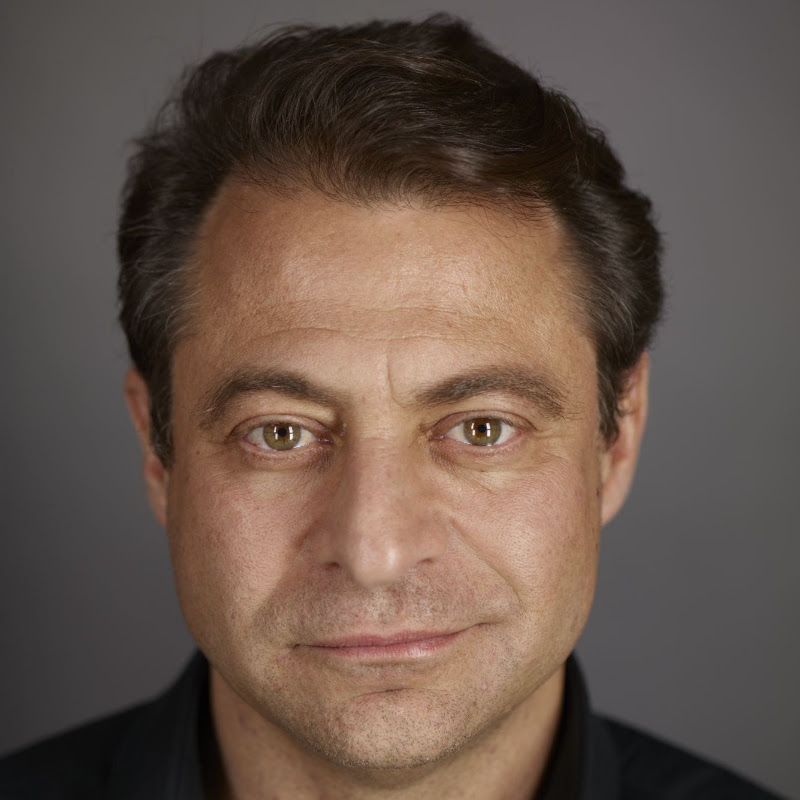 Peter H. Diamandis
Is it worth your time?
You get a detailed account of technological predictions regarding artificial intelligence timelines, human-machine merging, medical life extension, and economic restructuring over the coming decades.
The conversation examines how accelerating computation, artificial intelligence, and biological integration are driving toward the technological singularity. It explores the concrete timeline for artificial general intelligence and its wide-ranging societal effects.
AGI timeline and the singularity. Kurzweil expects AGI by 2029 and the singularity by 2045, defining AGI as matching human expertise across thousands of distinct fields. He argues that this rapid technological progress follows exponential laws rather than linear ones. He points out that large language models are already answering questions across multiple domains, outperforming individual human capabilities in sheer breadth.
Merging with computational intelligence. Kurzweil expects humans to merge with computational intelligence to multiply human intelligence a thousandfold by 2045. He predicts high-bandwidth brain-computer interfaces will arrive in the mid-2030s to link biological neurons directly with the cloud. He uses the example of generating realistic avatars from personal writings to handle interviews and conversations.
Longevity and medical simulations. Kurzweil expects medical simulations to advance rapidly enough within five years to test millions of drug possibilities in a single weekend. He argues this capability will drive breakthroughs against major diseases like cancer and heart disease, paving the way for longevity escape velocity. He notes that drugs like Repatha have successfully reduced his own LDL cholesterol to 10, removing arterial plaque entirely.
Universal basic income and employment. Kurzweil argues that universal basic income will be necessary by the 2030s because 79% of corporate employees do not find meaning in their current jobs. He notes that automation and increased productivity will generate massive wealth, making traditional employment obsolete for meeting basic financial needs. He anticipates that the next decade will bring significant social volatility as society attempts to absorb these rapid structural changes.
Ray Kurzweil's Predictions on AI
They're all hand painted. When I read The Singularity is Near in 2005, I thought it was the most important book I had read in my entire life up until that point.
It was quite controversial when it came out about 20 years ago. Stanford held a meeting of several hundred AI experts to examine its predictions. People agreed with me that it would happen, but they thought it would take a hundred years rather than 30. Now, 2029 seems overly conservative; people are predicting 2027 and sooner. It is non-controversial today given how things have unfolded. Put yourself in the mindset of this being completely controversial at the time. Many things we predict on the podcast have that same flavor. Looking forward 10 years is very hard, and people feel those things are impossible, but if you rewind the tape, these impossible things routinely happen. Because of hindsight bias, everyone then claims they saw it coming. It's a good exercise, especially since things are happening so quickly now that looking one year out is like a long-term prediction. Ten years ago, I didn't like to predict things one or two years away, but now that is a long-term prediction.
My first prediction in 1989 was that we're going to reach human-level AI by 2029, and people laughed. My other prediction is that we're going to reach the singularity by 2045. To explain the difference: we will multiply our intelligence a thousandfold. It's not that we have biological intelligence and AI over here that we somehow relate to; we're going to merge with it. We won't be able to tell whether an idea is coming from our biological intelligence or our computational intelligence. If I ask you to think of an actress and you think of one, you don't know where that came from; it just appeared in your mind. It will be the same way. Today, you can tell the difference if you go to your favorite LLM, but we're going to become a thousand times smarter by 2045.
Many things have already amplified dramatically. For example, we can take our models of biological paradigms and simulate millions or even billions of different possibilities in one weekend. In some ways, we'll be able to simulate biology for medical tests even faster than that. We can do that today, although we don't have all the paradigms of what biological intelligence will do. I've talked to people modeling this, and the most conservative view is that in about five years, we'll have all the conversions done to biological intelligence to predict what different chemicals will do. We can try out a million tests in one weekend and predict the results very quickly.
Understanding Human-Level AI vs. Singularity
Your predictions from 1999 are landing within a year or two of reality, which is different from my time at the MIT AI lab where people predicted things that never happened. In 2005, nobody believed AI would happen because it had been predicted twelve times and whiffed every time. Yet, the date for human-level intelligence will land within three years of what you predicted 30 years ago, and the date it crosses all combined human intelligence—your prediction of 2045—will likely happen sooner.
It has to do with thinking exponentially. Others think linearly, assuming if it took 10 years in the past, it will take 10 years in the future.
I've argued on this podcast that the Turing test went by with a whimper, not a bang. The Loebner prize was cancelled before the Turing test was arguably passed, yet it was passed without celebration. The Turing test only matches an ordinary person, not an expert. AGI is a better view because it matches the best person in each field. There are several hundred thousand fields you could be an expert in; AGI means matching a human in any of them and combining those insights, which no human can do. Einstein was very good at physics and interested in the violin, but he was not an expert violinist. Being an expert in thousands of fields and combining those insights is quite unique.
One of my favorite scenes in Charlie Strauss's novel Accelerondo features posthuman uploads on a star wisp traveling to another star system, arguing over whether the singularity has even happened. Not everybody agrees that we've passed the Turing test, and when we pass AGI, there will be similar disagreements.
Some say AGI is basically as good as someone with slightly above average intelligence, but I define it as being an expert in every area where expertise is possible. That is an impressive level, and I think we'll get there by 2029. Large language models can already answer questions in many different fields; no person can do what they do today, let alone what will happen by 2029. We even have a moonshots test where you have to fool your spouse for three minutes on a Zoom call.
Regarding the concern that goalposts for AGI definitions are constantly moving, my definition is actually pretty strict. To pass it, you must be an expert in thousands of different areas, which is more strict than most definitions. This leads to the moment where AI works on itself and self-improves, creating incredible acceleration. It's imminent; we're predicting on this podcast a 100x step up in the efficiency of existing algorithms, independent of the underlying curve. You've started to see AI improving itself a little bit, though it hasn't been very dramatic yet.
The Future of Work and Universal Basic Income
I think AGI will arrive by 2029, within a band of three or four years. While some feel we have it already, most people will believe it by then. If we debate it for the rest of time and it happened between today and 2029, you are irrefutably right in your prediction from 30 years ago.
I remember when we were in a car with Peter, going to the CNN studios to launch and announce Singularity University. I was a young, fresh-phrased U fellow and I told you they would ask about exponentials as part of the briefing. You said, "I'd better bone up on the subject," and it took me 10 seconds to realize you were joking. You've been saying this steadily for 30 years.
The basic debate about whether this will happen, or if it will be exactly 2029, has gone away; I run into very few people who say it's 500 years from now. Instead, the issue has changed to whether it is good for humanity. Some books say it will eliminate humanity and we'll all be screwed. While there is a chance things will go wrong, I think what we're seeing will be beneficial, although it will change things rapidly and lead to some foreboding.
There's a question we've debated on the show: are we going to achieve consciousness and sentience with AIs? Will they petition for personhood, and will society approve? I'm curious if you think we'll feel our AIs are conscious and sentient, meaning we shouldn't shut them down and they should have rights like humans.
Consciousness is a subjective point of view, and there is nothing we can do scientifically to prove that an entity is conscious. My mentor of 50 years, Marvin Minsky, argued that because there is no scientific test for it, the debate is meaningless and we shouldn't deal with it. On the other hand, you could say it's the most important thing; I need to be able to relate to you as if you are conscious. I consider myself conscious—my scientific test is that I think I am, though my wife disagrees.
I am a proponent of AI personhood and respectfully disagree with my friend Rey that there aren't benchmarks. Over the past two years, there has been marked progress toward developing quantitative benchmarks for self-awareness—a slightly less mushy term than consciousness—including tests for whether transformer models can detect overlaid activations in their residual streams. I see progress toward developing real benchmarks for self-awareness in models.
I cannot prove you are conscious, but I believe you are; I believe a human being that acts conscious is probably conscious. Among all these conscious beings, there is one person I relate to differently—one I care about in a different way than others: my own consciousness. Why am I conscious? Why was I born in 1948? Why am I myself? This is the most fundamental anthropic, lowercase 'a', question one can ask, along with why the universe appears the way it does.
The Role of AI in Society and Ethics
We'd had a couple of glasses of wine and somebody asked about consciousness, and you said, "Language is a very thin pipe to discuss concepts that are this complex." It blew everybody's mind.
AI will be indistinguishable from a conscious being. Ray Kurzweil might say it's conscious now, and while people aren't sure, it will keep showing all the earmarks of a conscious being until you accept it because it would be useless not to. I think we will accept AI entities acting conscious within a few years; the outer bound of that is 2029. A year or two later, everyone will accept it because they are so convincing and humanlike, even though they have weird behavior, like merging their brains to have combined personalities, which normal beings don't do.
Today, people have AI therapists. Sometimes they don't believe it, but other times they do because the transcripts sound very convincing. This will continue until people really accept that their therapist is conscious, which is already beginning to happen.
Ray, something you said on the abundant stage with myself and Salim really rocked a lot of people to contextualize the speed.
I still believe we will see as much change in the next decade as we did from 1925 to 2025, when the highest level of technology was the Ford Model T and only 30% of homes had electricity. By 2035, we will be way past AGI. We will have supercomputers and be merging with them, making us far more intelligent than we are today. This is a huge amount of progress compared to the previous 100 years.
Currently, the limiting factors are regulatory, social structures, norms, and market capture. Employment is considered equivalent to meeting one's financial needs, but we will soon produce enough that everyone will be wealthy by current standards, even without traditional jobs. Many company leaders I interact with are in denial, claiming it's not happening or that things take longer than predicted, but this will be a major change in how we organize society.
The next 10 years will be the most volatile as we try to absorb this, leading to my definition of the singularity: being at least a thousand times more intelligent.
Longevity and Health Innovations
Seoulski has written extensively about this in the context of Russian cosmism. Prior to that, we could try to create avatars of ourselves; we created one of my father, and I am now creating an avatar of myself. I have a lot more material to put into text—11 books and several hundred articles written by or about me. All of this will go into a large language model to create something that looks and talks like me. Since I receive five to 10 requests for interviews and podcasts a day and cannot do most of them, I will offer them the chance to interview the avatar. The avatar will be better than me because it will remember everything I've said, and you can interview it for as long as you want in any language. This will happen this year.
Creating everything about me or my father—of whom we have less material, though enough for a lively avatar—is probably another 10 or 15 years away. I am also very interested in longevity escape velocity, where you age a year but get that year back through advances in medicine, so you don't actually age.
Regarding 2032 and whether we can reach longevity escape velocity without nanotechnology, just based on AI drug discovery: it really has nothing to do with nanotechnology. Nanotechnology is a way for us to take advantage of AI without it being obvious, so I won't know if an idea comes from my biological or computational brain. But longevity escape velocity depends on advances in medicine and the ability to simulate what happens in biology. We must create biological models quickly so that in one weekend you can simulate and test millions or billions of possibilities to find a cure. Talking to people working on this, five years is an outside limit. If we achieve that, it will take another couple of years to go through most of our medical problems.
Through computation, in three to five years, you'll be coming up with new cures and treatments to both ward off and avoid diseases like cancer. Today, if someone has a problem, I tell them to wait a few months and a new cure will appear, which happens in most cases. I can think of four or five vital instances where this has occurred, applying to cancer, heart disease, and hip or knee replacements. Then there is general aging and life reversal.
Take heart disease. Repatha is a new drug that dramatically reduces LDL; I've reduced mine to 10, a very low number, and my arteries now have no plaque. That wasn't true three to five years ago. I'm developing ways to avoid problems that didn't exist a short while ago. This is an example of a chemical in your bloodstream. There is a version of the world where that is all you need to reverse aging, and another where you need something more targeted, like David Sinclair's gene therapy for epigenetic reprogramming. He is heading towards three molecules—cheap oral supplements you take to reset your epigenetic age.
People generally only take their lives if they are in insufferable physical, mental, or spiritual pain; otherwise, they want to remain alive. I can describe a way to replace every one of our organs within a decade or two. We will get more into longevity escape velocity as time goes on. I anticipate either a world where everyone has those options within 10 years, or one where a subset of people have replaced five organs and used stem cells in their brain to extend their thinking ability, while another subset is violently opposed, ranting in the streets to prevent it because they want natural death.
The Future of Consciousness and AI
You can go to Switzerland for a natural death. I had several lunches with Conorman, a 90-year-old Nobel Prize winning economist. He was healthy enough to walk five blocks to our meals, but he was mindful of the bad things that happen in your 90s and preferred they not happen to him. Even though he was healthy, he went to Switzerland to end his life. He was concerned about his kidneys, but after I shared some things I'm involved in regarding the kidney, he understood; it was actually an economic issue.
Ray, my father passed away a year ago at 97 via assisted death in Canada. I have never seen anyone as happy as my father was in his last week. I was told 20,000 people in Canada had this procedure this past year, most of whom go out in that state because they have agency. My father wanted to pass away with dignity, he got his wish, and he was happy as a clam.
I would argue we should be talking about cryonics, recognizing that approximately 150,000 people die every day. If we reach longevity escape velocity by the early 2030s as you predict, millions will die between now and then. Why aren't more people obtaining cryonics plans? We have hundreds of thousands of subscribers and viewers; we should encourage them to consider cryonics so they don't have to move to Canada to die with dignity.
Cryonics is Plan D; Plans A, B, and C are to remain alive one way or another. I have concerns that you may come back and not be happy with the way you return, but cryonics is better than not doing it because you have some chance. There are risks, so very few people who die elect cryonics. I have done it. For those who don't know, companies like Alcor allow you to sign up so that near the moment of death, they put antifreeze or an equivalent into your bloodstream and freeze you, with the notion that technologies like nanotechnology will eventually reconstruct your full neocortex. I think probably a few thousand people, order of magnitude, have cryonics plans.
Technologies will unveil themselves to you in the next 5 to 8 years. Whether you keep yourself alive and enter longevity escape velocity or you're chronically frozen, you'll probably have a hundred, thousand, or million avatar versions of you operating in the universe in parallel with your meat body. Whether those have consciousness is what we discussed earlier, but they'll be better at remembering everything I've said because a computer won't forget anything unlike myself.
I did a conference at UCLA with Martin Rothblat to represent her progress over the last 30 years. It included me, Martin, two professors, and Martin's avatar. The avatar looks realistic, like doing a Zoom with her, and is very convincing. It remembers everything Martina said, and you could ask it anything. It even knew when to come in; in a conference, you have to wait for silence to say something relevant, and it worked very well. This was a conference with the avatar and Martin herself at the same time.
I stumbled a couple years ago on your "how my predictions have fared" essay, where you were 86% outright correct. You worked on speech recognition years ago and predicted the interface to your computer would be voice, not a keyboard. We're so used to that now that I feel we're underpredicting how this interface will change for the first time since the GUI in the 1980s. It's got to be imminent. When you look at these convincing avatars, they are a much better way to interact with technology.
Well, another one I got wrong was that we would have self-driving cars. Your timeline on the technology was incredibly close, but regulatory is very hard to predict. The computer interface is not held up by regulatory, but perhaps momentum, barriers, or Apple not doing AI. That feels like it will happen very soon. When you talk to an avatar at a conference, why am I not talking to my computer that way? When we talk about Ray's books, why is a picture not popping up in real time that we're all looking at? That's got to be imminent too; let's start that company.
Ray, if you look over the last six months, what breakthrough or development has surprised you the most?
I'm getting much more credence from people accepting this, which they didn't a year ago. Think of the difference between January 2025 and January 2026. Most people I spoke to a year ago would say AI is interesting but not very good and not really accepted; they've completely changed their views in the last year and are really accepting it now.
An article by therapy advocates says online therapists are doing a meaningful job, which wouldn't have happened a year ago. In 1999, I predicted AGI by 2029, and I still predict 2029. Elon Musk says 2026; while we'll have things that remind us of AGI then, we won't be convinced. It might happen sooner, in 2027 or 2028, but by 2029, I think everyone will accept it.
If we follow the law of accelerating returns and the countdown to the singularity—the idea that we emerged from a primordial soup and everything follows an elegant exponential calendar—does this imply our universe is abundant with human and non-human intelligent civilizations? And if so, does that imply there are non-human intelligent civilizations on or near Earth?
The fact that we can emerge as a far more intelligent version of ourselves in a short period doesn't imply there are intelligences beyond humans. We haven't seen evidence of that. There is a lot of interest in finding signals in the universe from an intelligent source, but we haven't found any yet. As our ability to evaluate different types of non-Earth intelligent sources increases and we still see no evidence, it indicates they aren't there. However, we can't determine that for certain because we can only look at a small fraction of what's out there. So far, if we're not alone, we're still pretty lonely. It's possible we'll find something, but we can't point to any star system and identify a clearly intelligent source we'd like to contact.
Regarding BCI and our ability to uplevel our capabilities: when talking about longevity escape velocity and living past hundreds of years, most people fear getting there without cognitive clarity or the ability to maintain memories. One technology that would assist us is high-bandwidth BCI, rather than the thin pipe we currently use for input and output. I encourage everyone to ask their favorite LLM for a list of Ray Kurzweil's accurate predictions; it's a very impressive list, including the prediction that we'll hit high-bandwidth BCI in the mid 2030s.
The future could be terrible or fantastic, something welcoming or alarming. Once we have high-bandwidth BCI, concepts driven by the cloud will emerge in your mind.
I'm writing my autobiography and trying to remember things from when I was three or four. I have a pretty good memory, but it would be helpful if AI could help me. It would need more capability than it has now to generate views of things we don't have, though I am using large language models a little bit. It should be out within a year.
Being a futurist is fraught with hindsight bias. You get things wrong—self-driving cars aren't out yet, clothes aren't made by nanotechnology, and we don't have DNA computers or biological computing. People are more generous now, but at the time, everyone thought I was a crackpot. The most amazing part is that everyone now has a computer in their pocket and clothes, an extension of their life and mind. If you don't have your cell phone, you've left three-quarters of your mind.
The headmaster of my kids' school took sixth or seventh graders to an island without phones for three days to learn to live without them. The new headmaster called that inhumane, like the book Lord of the Flies. For seventh graders, the phone is so attached to their mentality, mind, and body that they can't function without it.
One person has two chips in his hand now. It will be like virtual reality; you'll see a screen interfacing with your computer that is on all the time. You won't carry something around or leave it at your apartment. Beyond that, it will go inside our nervous system and interact with biological neurons.
We're starting to record everything. Peter has the wearable, and now we have omnidirectional mics the size of a credit card. You throw it on the table and everything that happens is recorded and assigned to whoever said it.
At this year's Abundance Summit, we're giving everybody two devices. One is a ring format Pebble is putting out where you can quickly record a message to an LLM, and we're also giving everyone something called Applaud.
You've spoken eloquently about the need for universal basic income and even the universal high income Elon mentioned. To me, retirement doesn't make sense because I enjoy what I'm doing, but most people dislike their jobs so much they don't want to do them forever. It is liberation to find something within one's means that gives gratification without unpleasant work. Since 79% of corporate employees do not find meaning in their work, we'll have to do something equivalent to UBI; otherwise, the economic system won't work for anybody. I predicted at TED that we would develop UBI by the 2030s, and I think that's still true.
Imagine you're in a courtroom and the prosecutor says you've made absurdly accurate predictions for 30 years, so they don't believe you're human. Hopefully, I would appear human enough to convince people, though you can't really tell because non-humans would still act human. I could say something mildly snarky about looking at Rey's immunome to see if he's been exposed to future diseases to determine if he's a time traveler.
One of your striking accomplishments, more than 60 years ago in February 1965, was your appearance on I've Got a Secret with Steve Allen, where you demonstrated an AI-based music generator. That was actually the first music composition by AI anywhere. The panel's secret concerned something Raymond did. They asked if he composed the unlikely sounding piece of music, and he said no. When asked if formulas, letters, or something unusual were used to make up the notes, he replied, "You could say that I guess." They then asked if the notes spelled out a name or were a mathematical formula.
This nest of spaghetti-like wire is united to a bunch of little relays that write the music. They feed it into this white cheese box, and then the typewriter does the final part of the process.
Sixty years ago, you demonstrated what I understand to be the first AI music generator on television. Now, looking toward 2086, what form will most intelligence in our solar system take? Will it be bodies similar to human intelligence, cyborgs with nano robots in the bloodstream, uploads, foundation models like GPT, or some unrecognizable arrangement of matter or energy that is far more efficient? I have talked on the podcast about how black holes are amazing computers in principle, so maybe it is something like that, or uploads to the gravitational field.
We will have computronium by 2045 if not sooner; I know people working on this. It takes what is feasible and creates matter that performs the maximum computation we can conceive of. One analysis suggests a one-liter cube would be more intelligent than 10 billion people combined. By 2086, it will be beyond what we can imagine. Like my father playing the fifth Brandenburg Concerto by Bach, it will be something like that but more fantastic, generating fantastic emotions and possessing the intelligence of all people combined.
If I heard correctly, you think in 60 years most intelligence in the solar system will be software running on computronium. Referencing Seth Lloyd's work from 25 years ago on the ultimate computer and the physical limit of maximum computation, that will be feasible well before 2086. Any kind of intelligent being is going to contain that.
The point Alex and Rey are making is that humanity as biological forms are either in the vast minority or displaced by a digital or quantum version of intelligence. I didn't say meat bodies would go away, but computronium running the ultimate software will certainly have that capability by 2086.
Since you've been inside Google, which is like Bell Labs or University times a thousand, you've noted that Moore's law is actually a series of shifts in compute platforms—from telecom switches to vacuum tubes, transistors, and integrated circuits. Now we are pushing silicon to its limit and scaling horizontally, putting half a trillion dollars into Nvidia chips, hitting a flat spot while waiting for the next breakthrough in how we compute.
I think we will actually generate slower computational bodies. The brain uses about two watts of power, with neurons computing between one and 200 calculations per second. Both are extremely slow compared to the trillions of computations per second we are capable of. Decades ago, I wrote that it would make sense to slow it down and introduce parallel processing, as every neuron in the brain computes at the same time. If we slow down our billions of simultaneous computations, we would use much less power and solve the power problem.
I believe there is imminent innovation in that vein, moving toward circuits using a completely different paradigm at the molecular level in three dimensions. We can create three-dimensional circuits at the atomic level where one liter of computing matches 10 billion human beings. When you intersect synthetic biology or neuroscience with AI and computing, all sorts of new fields are instigated.
Robotics has not affected us very much, but that will begin to change in 2026 or 2027. Currently, if you eat a meal and leave your dishes, no robot can pick them up and clean them the way a human can. That is going to happen over the next couple of years.
We must bring AI to the real world of handling physical things using robots. My son Ethan is involved with venture capital, and all of his investments are in AI and bringing its practice to things that haven't been done yet. The opportunities to create effective new businesses are higher than ever. Kevin Kelly once said the next 10,000 business plans will be to take a domain and add AI to it. If you think about what you did early on with the keyboard company and omnifont character recognition, that same person today would probably see a billion dollar valuation within a year or year and a half of pounding.
The cliche is that every American male thinks about ancient Rome at least once per day. The question, Ray, is why didn't ancient Rome have an industrial revolution? They did have a technical revolution given the capabilities of that time; we can only create things that are feasible. Some people were able to think in the future, like Peter and I with Singularity University, thinking beyond what conventional people were.
You've said that intelligence and energy will become abundant in the future. I'm not that enthusiastic about nuclear because I still think it's dangerous. Regarding energy, we can use reversible energy for computation, which in theory uses no energy at all because it reverses itself and gives back the energy it took. We haven't experimented with that, but it seems feasible. We could also dramatically reduce the speed of operations to overcome excessive energy use, as we are currently running things at maximum speed. Ultimately, we will go to reversible energy using atomic levels of computation which, in theory, require no energy.